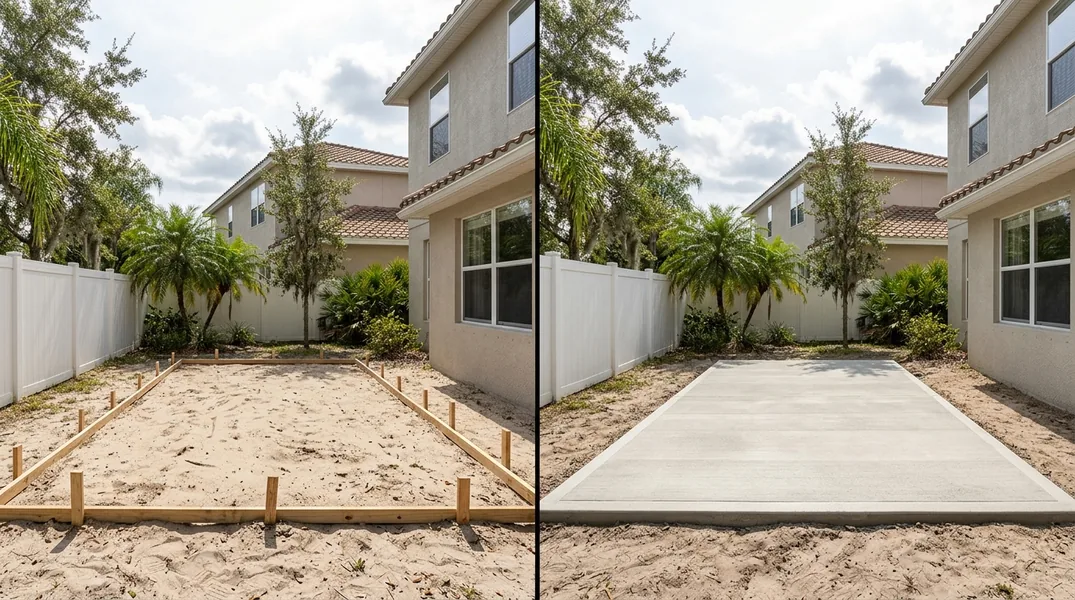
Understanding Concrete Slab Thickness in Florida
When planning a concrete slab pour in Tampa, one of the most critical decisions you'll make is determining the proper thickness. Many homeowners assume all slabs are created equal, but the reality is far more nuanced. The thickness of your slab directly affects its longevity, load-bearing capacity, and resistance to Florida's unique climate challenges.
For residential applications like patios and shed pads, a standard thickness of 4 inches is the industry baseline. However, if you're planning a garage slab that will support vehicles, you should consider a minimum of 5 to 6 inches. The additional depth provides the structural integrity needed to handle the concentrated weight of cars and trucks without cracking or settling. Concrete Patios in Tampa often perform best at 4 inches when they're purely decorative, but if you're adding furniture or planning foot traffic from heavier equipment, consider going to 5 inches for added peace of mind.
Florida's subtropical climate and sandy soil composition add another layer of complexity to slab thickness decisions. The seasonal moisture fluctuations and occasional heavy rains mean your slab needs to be robust enough to resist heaving and settling. Thicker slabs distribute weight more evenly across the soil, reducing the risk of cracking during the wet season or during periods of drought when the soil contracts.
Garage Slab Pour: What Every Tampa Homeowner Should Know
A garage slab pour is one of the most demanding concrete projects you can undertake on your property. Unlike a simple patio, your garage floor must support the weight of vehicles, resist oil stains, and provide a smooth, safe surface for years to come. Before the concrete truck arrives, you need to understand the preparation requirements and design considerations that separate a successful pour from a costly mistake.
The foundation work for a garage slab is where most problems begin. Your contractor must excavate the area to the proper depth, typically 6 to 8 inches total (including the concrete thickness), and then compact the soil thoroughly. This compaction step is absolutely critical in Tampa, where sandy soils can shift and settle unpredictably. A poorly compacted subgrade will lead to cracking, uneven settling, and eventual failure of the slab. Many homeowners don't realize that the work happening below the concrete is just as important as the concrete itself.
Reinforcement is another essential consideration for a garage slab. Wire mesh or rebar helps control cracking and distributes loads more evenly across the surface. For a typical residential garage, 6x6 wire mesh is often sufficient, but larger garages or those expecting heavier use should incorporate rebar. Additionally, proper slope and drainage around the garage opening prevents water from pooling and seeping into your garage, a common problem in Florida's rainy climate. Your contractor should ensure the slab slopes away from the garage door at a rate of about 1/8 inch per foot.
Shed Pad Concrete Tampa: Foundation for Longevity
A shed pad might seem like a straightforward project, but the quality of your foundation determines how long your shed will last and whether it remains level and functional. Many Tampa homeowners make the mistake of pouring a thin, inadequately prepared slab and then wondering why their shed settles unevenly within a few years. A proper shed pad concrete Tampa installation requires the same attention to detail as any other concrete project.
The minimum recommended thickness for a shed pad is 4 inches, but this assumes proper site preparation and a well-compacted base. Start by clearing the area of vegetation and debris, then excavate to remove any organic material that could decompose and cause settling. The soil should be compacted in layers, with each layer receiving proper attention to eliminate air pockets. Many contractors use a plate compactor to ensure uniform density across the entire area. This extra effort upfront prevents the frustrating scenario where your shed develops a noticeable slope within the first year.
Proper drainage around your shed pad is just as important as the slab itself. Standing water around a shed can lead to rot, pest problems, and deterioration of your shed's structural integrity. Your contractor should ensure the surrounding grade slopes away from the pad and that no low spots collect water. If you're in an area prone to standing water, consider adding a perimeter drain or even elevating the pad slightly above the surrounding ground level. These preventive measures add minimal cost during installation but save you thousands in potential repairs and replacement costs down the road.
Patio Slab Thickness Florida: Finding the Right Balance
Choosing the right patio slab thickness Florida homeowners should select requires balancing durability, cost, and intended use. A decorative patio that will primarily host outdoor furniture and foot traffic can function adequately at 4 inches, but understanding the nuances helps you make a more informed decision. The thickness question isn't just about structural capacity; it's also about how your patio will perform in Florida's specific environmental conditions.
Florida's sandy soils and high water table present unique challenges for patio installation. The 4-inch standard provides adequate protection for most residential patios, but if you're planning to use your patio for outdoor cooking, entertaining large groups, or placing heavy planters and outdoor furniture, consider going to 5 inches. Concrete Patios with this additional thickness resist cracking better and provide a more stable, long-term surface. The extra cost is minimal compared to the potential need for Concrete Repair & Resurfacing down the line.
The base preparation for your patio is equally important as the thickness decision. A 4-to-6-inch gravel base, properly compacted, provides drainage and support. In areas with poor drainage or high clay content, some contractors recommend an even thicker base. Proper site grading ensures water doesn't pool on your patio surface, which can lead to freeze-thaw damage in rare cold snaps and algae growth. Your contractor should also discuss whether you want reinforcement and what finishing options best suit your needs and budget.
Site Preparation and Drainage: The Foundation of Success
Before a single bag of concrete is mixed, the real work of a successful slab project happens during site preparation. This phase determines whether your garage slab, patio, or shed pad will remain level and functional for decades or develop problems within a few years. Many homeowners underestimate the importance of this step, viewing it as something to rush through to get to the visible concrete work.
Proper grading and drainage are non-negotiable in Tampa's climate. Heavy summer thunderstorms can dump several inches of rain in a short time, and if your site isn't properly graded, water will pool and compromise your slab's longevity. Your contractor should establish a clear slope away from the project area, typically at least 1/8 inch per foot for the first 10 feet. For areas with naturally poor drainage, French drains or perimeter drainage systems might be necessary. These additions cost more upfront but prevent expensive water damage and premature deterioration.
The subgrade itself requires careful attention. Soft spots, organic material, and poorly compacted soil are enemies of a stable slab. Your contractor should remove all topsoil, vegetation, and debris, then compact the remaining soil in layers. For areas with questionable soil conditions, a geotextile fabric can separate the soil from the gravel base, preventing mixing and maintaining proper drainage. In some cases, engineers recommend removing problematic soil entirely and replacing it with engineered fill. These decisions depend on your specific site conditions and should be made by an experienced contractor who understands Tampa's soil and environmental challenges.
Concrete Slab Tampa Florida: Cost Considerations and Getting Your Free Estimate
Understanding the pricing for concrete slabs in Tampa helps you budget appropriately and avoid sticker shock. The cost varies significantly based on thickness, site conditions, reinforcement, finishing options, and current material prices. A basic 4-inch patio slab might run $6 to $12 per square foot, while a thicker garage slab with reinforcement and better finishing could cost $10 to $18 per square foot or more. These figures include labor, materials, and site preparation.
Several factors influence the final cost of your project. Site accessibility affects how easily your contractor can move equipment and materials; a backyard project requires more labor than a front-area installation. Soil conditions matter significantly; if extensive excavation or fill is needed, costs increase. Your finishing choice also impacts price; a simple broom finish is the most economical, while Stamped & Decorative Concrete options cost considerably more but add aesthetic appeal and property value.
The best way to understand costs for your specific project is to contact Tampa Concrete Pros for a free estimate. Our team evaluates your site, discusses your needs, and provides a detailed quote that accounts for all variables. Call us at (813) 921-1108 to schedule your consultation. A professional assessment beats guessing, and you'll have confidence in your budget before any work begins.
Looking for a professional concrete contractor in Tampa? Tampa Concrete Pros responds fast for all your concrete needs.
Get a Free QuoteOur services: Concrete Driveways · Concrete Patios · Stamped & Decorative Concrete